
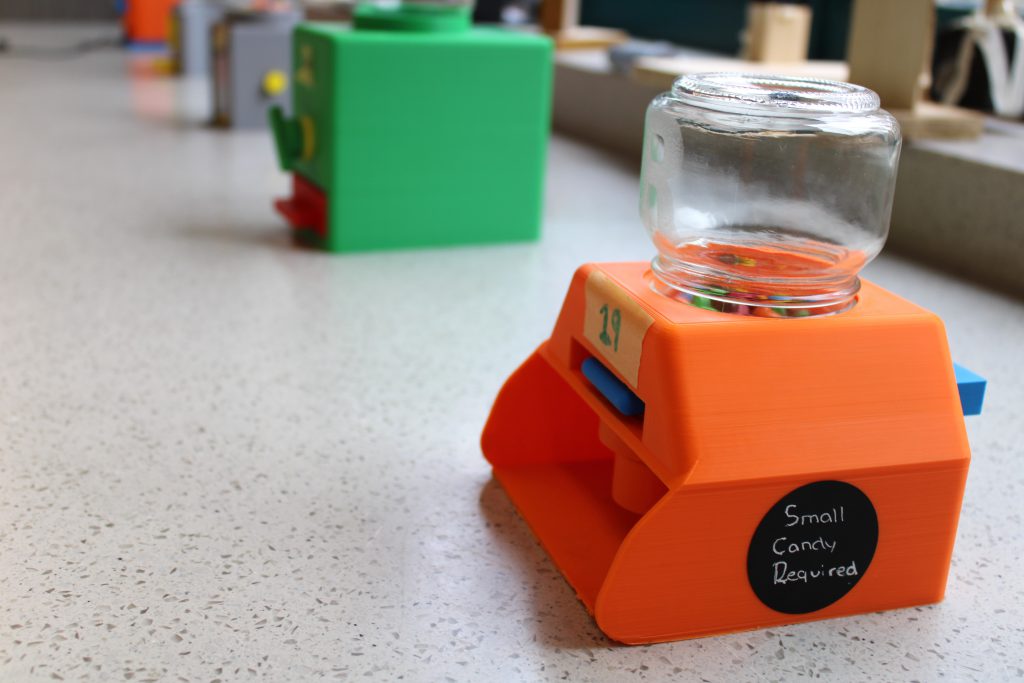
Students at J-D High School recently immersed themselves in a project that was as technical as it was delicious. Over the course of five weeks, Computer Integrated Manufacturing students were tasked with designing and building functional candy dispensers.
The project was fun, but also a rigorous exercise in the engineering design process. Students were required to navigate manufacturing constraints, complete a testing phase, and use Computer-Aided Design (CAD) software.
First, students had to become experts on candy. The research and development phase involved measuring the average diameter and shape of various candies to analyze their flow characteristics. Students evaluated things like candy shell consistency and if they would be prone to jamming.
Once the data was in, students moved to concept sketching. The hand-drawn designs needed to include the interface for provided jars, internal dispensing mechanisms, and overall dimensions.
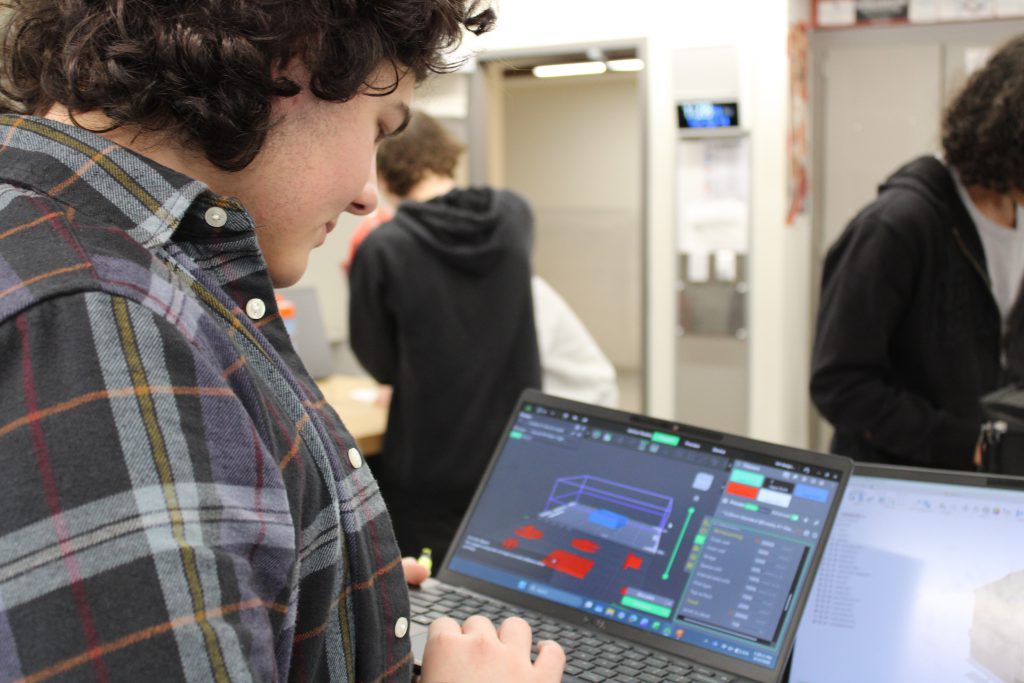
Students used Fusion 360 software to model each component. Designs needed to be precise enough to function with 3D printers, which were used to manufacture the dispenser pieces, including the internal gears. Students could also use laser engraving to personalize their work with custom logos, decorative patterns, and measurement markings.
In engineering, the first version is rarely the final version. A major component of the project was testing and making adjustments as needed. Students frequently identified issues like poor fits or candy jamming and had to head back to the drawing board.
“When the students solve mechanics and form function challenges into a final display that they are proud of is probably the most rewarding part for me,” shared technology teacher Larry Stroh. “That transition from students seeking validation to seeking excellence also reaffirms the project was a success.”
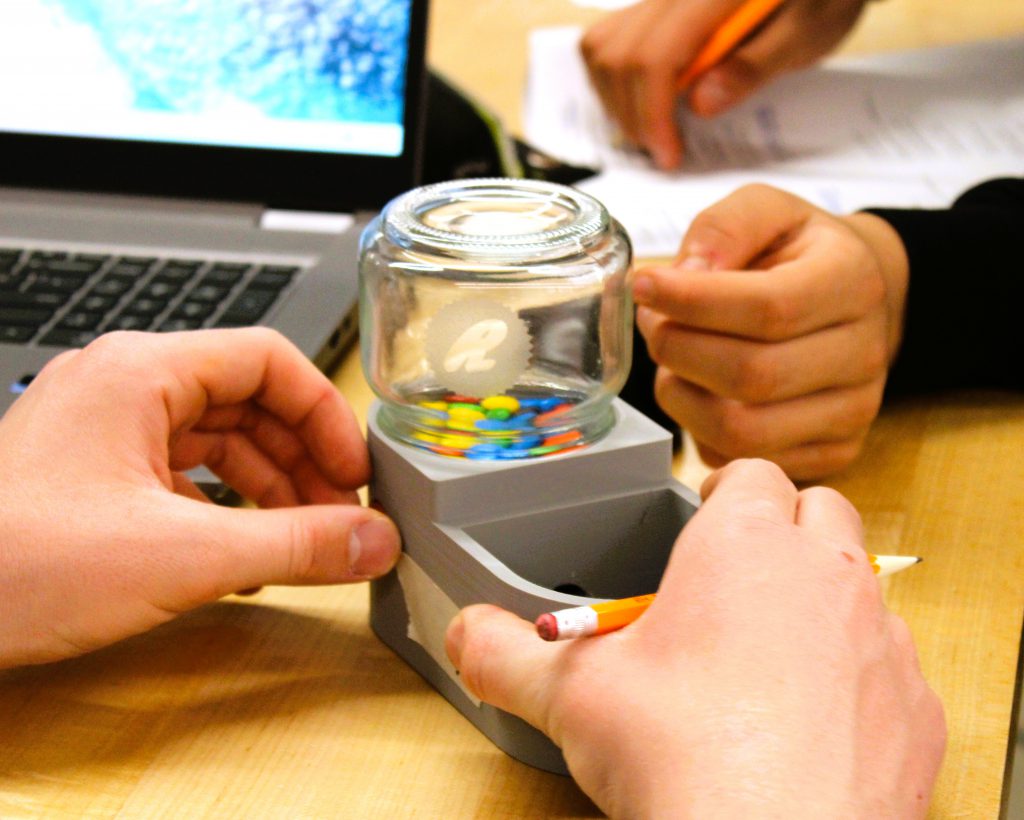
The project also allowed for creativity. While many stuck to traditional designs, one student designed his dispenser to resemble a toilet, complete with a candy-dispensing bowl and a flushing handle for the mechanism.
Other students focused on advanced functionality.
“My favorite part was adding a coin operating feature,” said student Aaron Feng. “I was the only one who did one that worked.”
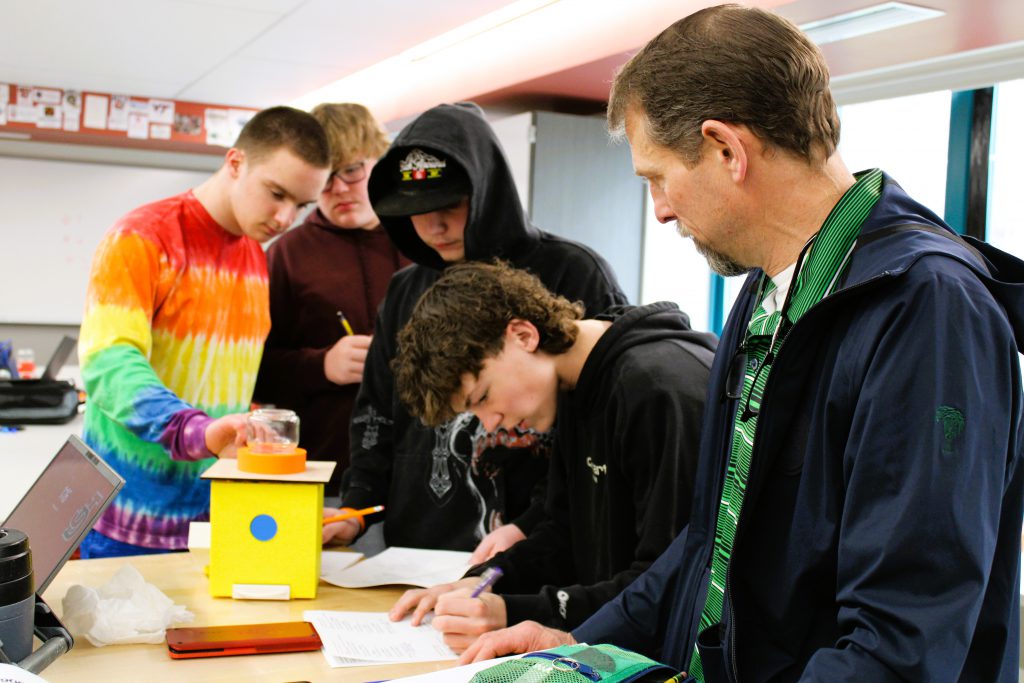
An important part of the project was peer evaluations, where students tested each other’s machines for things like ease of use and portion control. They provided constructive feedback using a five question evaluation rubric.
The final step wasn’t a test, but a written self-critique. Students submitted final design drawings along with a reflection on what worked well, the challenges they faced, and what they would do differently.
“Watching the students take basic concepts from a piece of paper and turn it into a fully developed functioning solution is always exciting,” added Stroh.
The Computer Integrated Manufacturing course is part of Project Lead the Way (PLTW). The innovative project-based learning program incorporates science, technology, engineering, and math.